The Bowing Guide
Twelve families of strokes used on this site. Each one shows what it looks like, where in the bow it lives, the most common mistake and which scales use it.
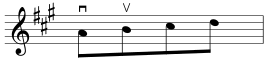
Détaché
Smooth, separate strokes with no gap and no accent. The bow changes direction for every note and the sound never stops.
Watch for: Bumps at each bow change. Fix: Keep the bow hand soft and let the fingers flex a tiny bit at each change.
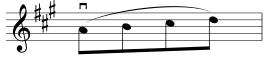
Legato (slurs)
Several notes in one bow. The left hand changes notes while the bow keeps a steady speed and contact point.
Watch for: Running out of bow, or the last notes of the slur fading. Fix: Divide the bow into equal parts before you start, and keep the speed even.
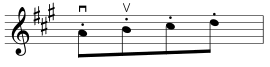
On-the-string staccato
Short notes with the bow staying in the string. The bow stops after every note.
Watch for: Notes that are short but scratchy. Fix: Release a little weight at the moment the bow stops, then set it again for the next note.
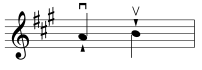
Martelé
A hammered stroke: pre-weight the string, release with a quick bow, stop completely. The start has a consonant-like bite.
Watch for: Pressing during the note, which chokes the sound. Fix: All the weight goes in before the note. During the stroke the arm lets go.
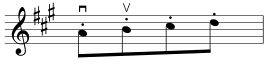
Spiccato
An off-the-string stroke. The bow drops and bounces in a shallow arc and the hair leaves the string between notes.
Watch for: Bouncing too high, so the rhythm becomes uneven. Fix: Lower the arm and make the arc flatter. Let the stick bounce; do not throw it.
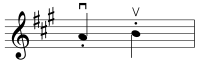
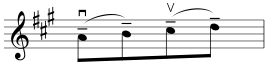
Louré (portato)
Several notes in one bow, each gently separated by a small release of weight. The bow does not stop.
Watch for: Stopping the bow, which turns it into slurred staccato. Fix: Think of each note as a soft swell, like saying "da-da-da" in one breath.
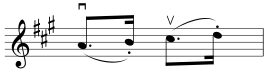
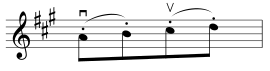
Slurred staccato
Several short, stopped notes in one bow direction. The bow stops, the finger changes, the bow moves again.
Watch for: Notes running together. Fix: Exaggerate the stops at first. Clarity first, speed later.
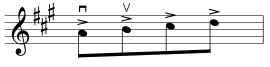
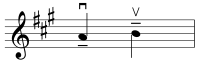
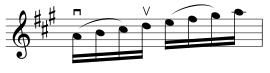
Bow distribution patterns
Mixed slurs and separate notes (slur 3 + 1, slur 2 + 2, and so on) train the bow to change speed while the tone stays even.
Watch for: Drifting toward the tip or the frog over several beats. Fix: Use the same amount of bow for the slur as for the separate note, which means the separate note moves faster.